
Integrated Pest Management (IPM) Concept
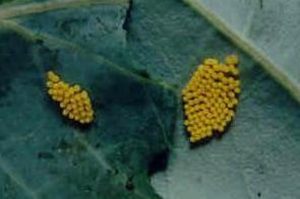
Every insect does not cause damage.
Pest population beyond certain levels (ETL) only causes damage.
Knocking down pests is not the only and the most appropriate solutionists is not the only and the most appropriate solution.
Why Integrated Pest Management (IPM)?
To promote sustainable agriculture
To protect environment
Soil, Water, Air
To conserve biodiversity (natural predators and friendly insects)
To manage resistance & resurgence in pests & diseases for
proper pest and disease management
To maintain/ enhance soil fertility
To obtain higher yields and better-quality produce
To minimize the number of sprays
To prevent damage to people’s & animal health by managing pesticide residue problem
To offer product as per the changing attitude of consumers (green label)
Problems of Agriculture in India:
Low productivity
High losses due to pests & diseases
High post-harvest losses
Pesticide residues above tolerance level
Pesticide related Health Problems: Cancer, Neurological Disorders etc.
IPM Global Status:
USA plans to have maximum crops under IPM
Stress on “Organic Farming”
Pesticide residue-A quality marker in WTO
Organophosphates banned
FAO & WHO stopped grants for use of chemical pesticides for control of mosquito etc.
Green label produce has better acceptability and fetches high price
High use of BTs in developed countries
Maximum share of bio-pesticide
IPM in India:
Increase in the consumption of bio-pesticides & bio-control agents
Decrease in chemical pesticide consumption
Poor farmer awareness/ acceptability
Need to develop area/crop specific IPM module
Challenges to Indian Agriculture:
To enhance agricultural production to feed the growing population without degrading: Natural resource base and the environment
To increase productivity per unit of land, water, energy and time & ensuring – No damage to Ecological foundations of Agriculture: Land, water, forests, biodiversity, atmosphere
Factors conducive to increased pest attacks:
Excessive & untimely use of irrigation water
High use of fertilizer
High use of pesticides
Dense plant populations
Mono-cropping
Inappropriate cropping system
How -IPM Prevention Indirect Measures
Location:
– Avoiding fields with history of diseases, pests, nematodes attacks
– Avoiding / Managing crops, acting as alternate hosts for the major pests
Crop Rotation:
– No monocropping
– Crop rotation with legumes: Cowpea, French Beans, Peas
– Crop rotation of shallow & deep-rooted crops: Onion and capsicum followed by cucurbits
– Rotation of soil building crops with exhaustive crops: Potato followed by cabbage
Selection of Varieties/Hybrids:
– Use of resistance/tolerant varieties
– Use of Area, Crop & Season specific varieties
– Use of varieties with wider genetic base
Crop husbandry and hygiene:
– No crop residues in the field
– Soil solarisation
– Removal of infected plant parts and burying under the ground (covered compost pit in field)
– Avoid use of un-composted harmful waste / improperly decomposed manure as manure
– Avoid use of untreated sewage water for irrigation
– Practice proper weed management
Fertilization:
– Increased use of organic manure/composts
– Use of balanced fertilizers in desired doses
– Minimize / avoid use of urea
– Increased use of foliar fertilizers
– Use of protein hydrolysates as fertilizers
Irrigation:
– Avoid flat irrigation
– Avoid excessive irrigation
– Practice raised bed/ furrow- ridge cultivation/ irrigation
– No submergence of bed/ridge tops during irrigation
– Use of drip/sprinkler irrigation systems
Insect Net Covering of Nurseries:
Border / Trap Crops
– Marigold (Tomato)
– Maize (Cotton), Cowpea (Cotton)
– Mustard (Cabbage, Cauliflower)
Harvesting and Storage:
– Harvesting at marketable stage
– Isolating of affected produce from the field
– Sorting / grading of produce
– Proper packing and transport
– Proper curing and storage
Observations & Decisions:
Crop monitoring (Nursery/Fields):
– Appearance of pests / diseases: Insects – Pests or Beneficial
– Deciding critical stage of control measures – Pest population: above or below Economic Injury Levels (EIL/ETL)
– Pheromones: Traps – Lures
Intervention – Direct Measures
Cultural and physical control:
– Summer deep ploughing
– Avoid monoculture Optimum plant densities
– Avoid high nitrogenous fertilization
– Avoid excessive irrigation
Biological Control:
– Parasites: Trichogramma
– Predators: Chrysoperla | Spiders | Coccinellids
Use of Bio-pesticides:
– BTs, Beauveria, Metarrhizium, Verticillium& Nomuraea
– NPV & G.V.
– Trichoderma, Pseudomonas
Use of Botanical pesticides:
– Neem, Karanj, Chillies, Garlic